Drapery Isn't Chaos. It's a Code.
If you've ever struggled to clothe your figures you're not alone. Most of us avoid drapery because fabric feels chaotic. It looks like a wealth of detail with no logic underneath, and we end up either drowning in folds that don't contribute to the figure, or skipping clothing altogether and defaulting to another nude pose.
But here's the thing: we don't live in a world of nude figures. We're in a world with a diverse array of clothing styles that we encounter every day (fashion, costume, status, class, job) and as artists, it's a language we must learn to develop.
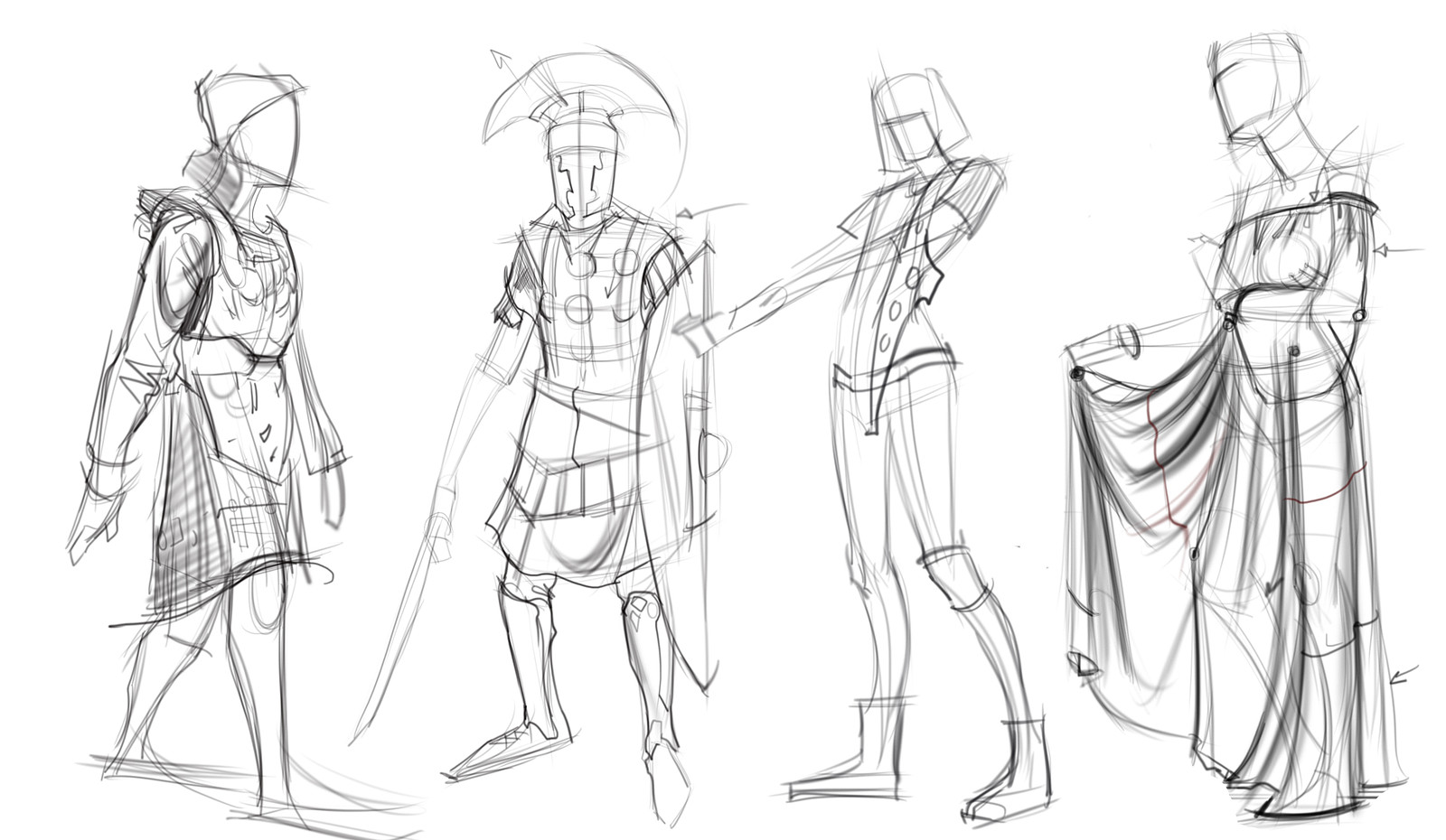
A System for Understanding Every Fold
That's what this course is all about. I want to share a way of seeing fabric that's analytical, a true system for you to utilize and understand. Once you have it, you can look at any piece of drapery and decode what's going on underneath. You'll see how the figure is creating those folds, why they're falling where they fall, and which ones actually matter. No more wasting time designing folds that don't contribute to the overall idea of the figure. No more losing the body underneath to surface detail. Just a clear, repeatable process for drawing clothed figures with confidence.
From Foundation to Storytelling
This course is broken into several lesson groups and we'll start by getting your fundamental skills set up! We'll focus on drawing a mannequin figure with enough perspective to support everything we build on top. From there, I'll introduce you to the six active folds, plus the inert fold that rounds out the seven. These almost always apply to most types of fabric, and once you can recognize them, you've cracked the code on probably ninety percent of what you'll ever draw. Then we'll move onto tackling subjects like silhouette, costume, texture and look at how fabric communicates ideas about a character. How does dress say something beyond just the pose? That's where drapery stops being a chore and starts being one of your most powerful storytelling tools.
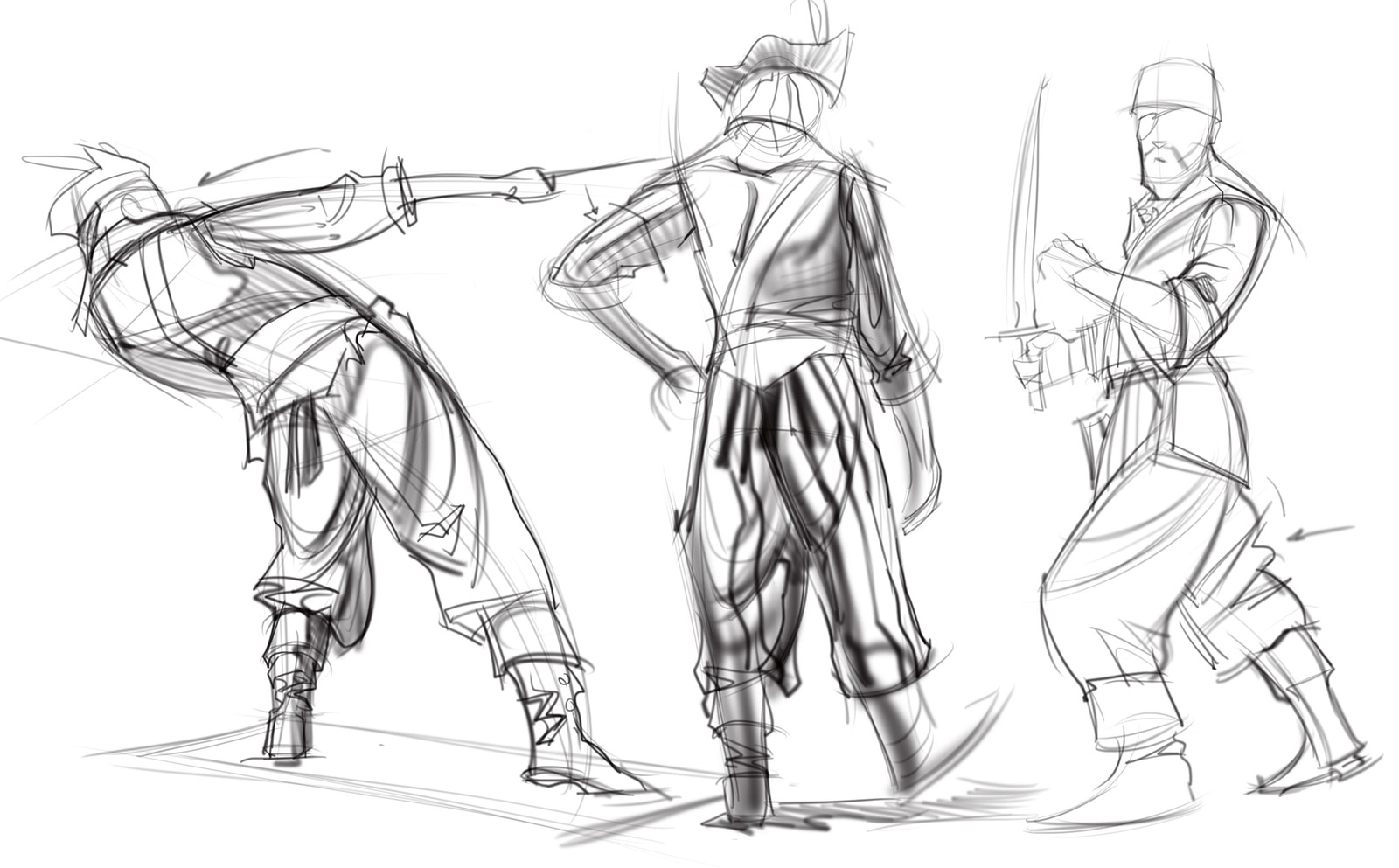
You don't need a specific background to take this class. It's great if you've already gone through my Intro to Figure Construction, but if you haven't, you can jump in here. You also don't need fancy tools. I work in Photoshop with a single stock brush, but you can follow along with colored pencils, pens, a sketchbook, whatever you're comfortable with. The only real requirement is something that lets you develop a drawing in stages, because that's how this process works.
If you're tired of avoiding clothed figures, or tired of guessing at folds and hoping they read, come join me and let's finally put some clothes on these figures.
The course launches on July 1st!
No, once you purchase the course you have lifetime access.
It's roughly 35 lessons and the total run time will be around 11 hours.
No, this is a "live course" where lessons will come out each week until the course is over.
You can expect about 2-3 lessons every week. You'll be emailed as new lessons are available to watch.
Maybe... There will be a series of assignments throughout the course. If you submit your work within the deadline there's a good chance your work will be included in critique videos. If you buy the course after these critiques are made still post in the community for user feedback.
No, this course can be done using any drawing materials. In this course, I use the default round brush and a Wacom tablet in Photoshop.
This course can bring a ton of value to any skill level, but is designed to cater towards beginner and intermediate students.
Since we're clothing the figure, it's a good idea to know how to draw the figure first. If you're completely new to figure drawing, I'd practice those skills first and then come back to drapery once you have some fundamentals down.